
Volume 1: Edition 1
A November Story
Zohran Mamdani Wins NYC Mayoral Race: A New Era for Politics
fayrouz mishak
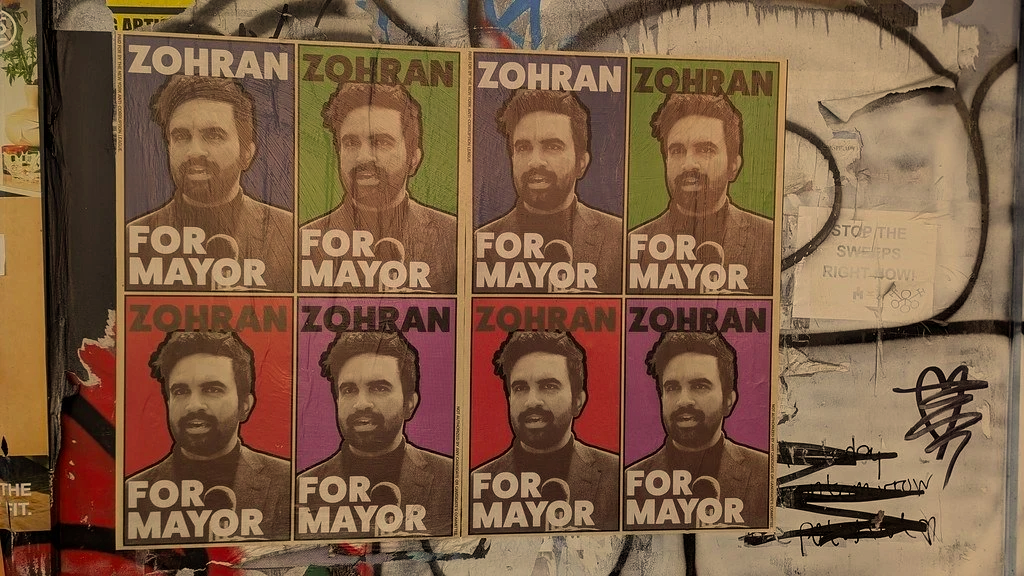
After 9/11, Muslims around the country were wrongly “othered” and became the enemy; less than twenty-five years later, we have a Muslim mayor-elect of New York City, Zohran Mamdani. And, he won the election with the highest voter turnout the city has seen since 1969 (Chu and Hollie).
Mamdani is thirty four years old, self-proclaimed Democratic Socialist. He was born to Muslim Indian Gujaratis in Uganda and moved to NYC when he was seven; he became a naturalized citizen of the US in 2018. He started off as a foreclosure prevention housing counselor, aiding low-income homeowners of color in the Queens borough in their fight against getting evicted, then he went on to become an Assemblyman for the NYC legislature, representing the 36th assembly district (New York State Assembly). As of November 4th, 2025, he is the first Muslim and the first South Asian to be elected for the office. This victory has a far wider reach than just New York City. It represents a huge cultural shift in New York politics, the Democratic Party as a whole, and how Americans view Israel and socialism.
Between the Democratic primary election and the election for mayor, Mamdani was able to flip four constituencies that then secured him his electoral victory (Chu and Hollie). During the primary, Mamdani was losing to Cuomo by six points in majority-Black neighborhoods. Since then and the election, he was able to increase his votes there from 39% to 64%, a 25-point gain. In the Bronx, Mamdani was able to reverse his 18-point defeat to Cuomo to an 11-point victory. He gained 18 points in election districts that include New York City Housing Authority
(NYCHA) developments. Despite his agenda’s focus on affordability, he struggled to win the majority of low-income voters (Chu and Hollie). But, he was able to gain 10 points in that constituency, winning 51% of the votes. Overall, he was elected with over a million votes and his success was no doubt due to the strength of his volunteer team.
All of Mamdani’s canvassing work is done by the over 100,000 volunteers—an unprecedented number—who donate their time to go door-to-door and speak to constituents, or speak to them on the phone (Anuta). Additionally, he received 54,178 donations averaging at $73.71 per donation (New York City Campaign Finance Board). Comparatively, Cuomo received 11,933 donations averaging at $487.09 and Curtis Sliwa received 16,675 donations averaging at $89.68. The number of donations, volunteers, and voters show that Mamdani’s message on delivering an affordable NYC for all resonates with the average New Yorker and it also signals a change in what New Yorkers want. They are done with establishment Democrats backed by millionaires and large PACs like former mayors Michael Bloomberg, Eric Adams, disgraced former governor Andrew Cuomo, even Kamala Harris. They are ready to try something new, and that’s Mamdani.
Many of you are likely familiar with some of his policies (rent freeze, taxing the rich, universal childcare, city-run grocery stores, fast and free buses, etc.) and know that his campaign is undeniably different from other politicians we have seen in recent years. Throughout the Democratic primary election and the proper mayoral election, he had one consistent promise: affordability and improved quality of life for all New Yorkers across the five boroughs. And, with that message, he was able to beat Republicans and establishment Democrats. And, yes, he had a really good social media campaign, but that is not why he won. Social media cannot save anyone from bad policies. Mamdani won by 40 points in areas that Kamala Harris lost to Trump by just a couple of points. 41% of NYC voters who did not vote in the 2024 presidential election intended to elect Mamdani in this election (Llaneras, Casse, and Grasso). At least some of those who voted for Trump in NYC did so because he promised to make the cost of living cheaper, even if he did not deliver on this promise. And, this will force the Democratic Party to do some serious introspection.
Journalist Chris Hedges says, “The Democratic Party is a corpse and has been for some time. And, every time it attempts to rejuvenate itself, whether that’s through Bernie Sanders or Mamdani, the Democratic Party seeks to essentially thwart the movement within the party to address the concerns of the base because the Democratic Party doesn’t function as a political party. The base is irrelevant” (Zohran Mamdani vs The Machine). Author Spender Ackerman adds, “The donors are the real constituents” (Zohran Mamdani vs The Machine). It is also why so many big establishment Democrats did not endorse Mamdani, and even attacked him, despite him winning the Democratic primary. He was not endorsed by Kamala Harris, minority Senate leader Chuck Schumer, Nancy Pelosi, the Clintons, or the Obamas. Minority House leader Hakeem Jeffries only offered his endorsement less than two weeks before election day (Anuta, Goldenberg, and Ngo). All are notably pro-Israel, some even receiving up to millions of dollars from the pro-Israel lobby, including AIPAC. Their endorsements would have lost them a lot of money. Clearly, the slogan “vote blue no matter who” is not something Democratic leaders truly believe in, nor will that strategy win them anything in the future. It seems that every recent Democratic campaign strategy, including Trump vs Biden then Trump vs Harris, has been “vote for me because I’m not the other guy, who is so much worse.” Brianna Joy Gray sums up this messaging failure, “Democrats do not care. There is no relationship between what the people want and what the Democratic Party is willing to advance. And, there are no consequences for their lack of democratic representation because there’s always the Republican Party and they’re always worse” (Zohran Mamdani vs The Machine). Hedges continues, “It stopped functioning as a party a long time ago, but it’s assiduously loyal to its donors because the hierarchy of the party, if you actually created a democratic system, the hierarchy of the party wouldn’t exist. And, they have decided that they will keep their first-class cabins on the ship as it sinks” (Zohran Mamdani vs The Machine). Mamdani’s election results are what it looks like when people are voting for a candidate rather than against the Republican. More importantly, they weren’t voting for just Mamdani, they were voting for his policies. They voted for socialism.
Completely unsurprisingly, Mamdani has been hit with all sorts of attacks like getting called a terrorist, a “jihadi” (what the hell does that even mean?), un-American, a communist (Joseph McCarthy’s ghost says hi), and an anti-semite (classic). A few years ago, maybe even a few months ago, getting called a communist or being accused of anti-semitism would have been a death sentence for any politician’s career and that is extremely beneficial for the extremely wealthy. It is a frequently played card but the move does not work anymore and this election proves that. What the Democratic Party will not accept is that people want socialism, or at least what socialism can do for them, even if they are unwilling to label it as such. Trying to be centrist or a moderate, a strategy Harris used, does not work, at least not in NYC. She swung to the right on issues such as immigration, climate and fracking, and the military (Where Kamala Harris Stands on 10 Key Issues, from Immigration to Guns). She was also always undoubtedly a Zionist, even lying that the Biden administration was working tirelessly to pressure Israel into agreeing to cease fire in Gaza. They never tried to exert such pressure (Ahmed).
Mamdani, on the other hand, clearly and proudly stated that he would arrest Israeli Prime Minister Benjamin Netenyahu if he were to visit NYC as demanded by ICC-issued arrest warrants, that he would not visit Israel, that he does not recognize Israel’s right to exist as an ethnostate, that Israel is an apartheid state, and that what is happening in Gaza is a genocide. He is not perfectly anti-Zionist but he is far more pro-Palestine than other politicians across the country. And, that is more reflective of the views of constituents. Anti-Israel sentiments are increasing across the country with 53% of US adults saying they have an unfavorable view of Israel, up from 42% in 2022 (Silver). Politicians claiming to be progressive can no longer exclude Palestine as Harris did. And, they must return to serving the people rather than the rich.
Zohran Mamdani went on NBC News and said, “I don’t think we should have billionaires.” For a politician to say that in the oligarchy that is the United States is insane. Even more insane that he was able to win this election in the financial capital of the world, despite having those same billionaires spend at least $40,000,000 against him. That statement could have destroyed his candidacy and it didn’t. The fact that his socialist agenda was able to energize so many voters and supporters in and outside of New York shows that people are starting to believe that their engagement with politics matters, that they can affect real change, that organized people for real change will defeat organized money. Now, we are seeing more young people run for Democratic seats. Amanda Litman, head of Run for Something says, “Passing of the torch implies the leaders are handing it off. What we’re seeing right now is, the new generation is taking the torch. They’re not waiting for it to be passed.” A few are even copying Mamdani’s campaign style in what some have dubbed as the ‘Mamdani effect.’ In California, we have anti-billionaire candidates like Oliver Ma running for lieutenant governor, Saikat Chakrabarti running to represent California District 11 in Congress, and Ramsey Robinson running as a socialist candidate for governor.
We are seeing this hope and energy that has not been seen in American politics perhaps since Obama ran for president. Now, it is for a different flavor of politician. And, it is important to expand this new era while keeping in mind that while Zohran Mamdani is exciting and inspiring, he is still a politician who should not be idealized or worshipped. He is not perfect. But, as long as he does not capitulate on his core principles and successfully delivers on his promises, we could be looking at an entirely new status quo. The whole world watched this election and now it watches with bated breath to see if progressive politics will succeed in the US.
Sources:
Ahmed, Nasim. “Biden Never Pressured Israel for Ceasefire, as Israeli Officials Boast of Exploiting US Support.” Middle East Monitor, 29 Apr. 2025, https://www.middleeastmonitor.com/20250429-biden-never-pressured-israel-for-ceasefire-as-israeli-officials-boast-of-exploiting-us-support/. Accessed 19 Nov. 2025.
Anuta, Joe, Sally Goldenberg, and Emily Ngo. “After a Lengthy Wait, Jeffries to Endorse Mamdani.” Politico, 24 Oct. 2025, https://www.politico.com/news/2025/10/24/after-a-lengthy-wait-jeffries-to-endorse-mamdani-00621799. Accessed 18 Nov. 2025.
Anuta, Joe. “With Election Days Away, Mamdani Turns Canvassing Operation into High Gear.” Politico, 31 Oct. 2025, https://www.politico.com/news/2025/10/31/with-election-days-away-mamdani-turns-canvassing-operation-into-high-gear-00630797. Accessed 18 Nov. 2025.
Chu, Haidee, and Mia Hollie. “How Mamdani Won,by the Numbers.” THE CITY, 6 Nov. 2025, https://www.thecity.nyc/2025/11/06/how-mamdani-won-map/. Accessed 16 Nov. 2025.
Llaneras, Kiko, Sebastián Casse, and Daniele Grasso. “Who Voted for Mamdani? The New York Election in Seven Charts.” El País English, 5 Nov. 2025, https://english.elpais.com/usa/2025-11-05/who-voted-for-mamdani-the-new-york-election-in-seven-charts.html. Accessed 19 Nov. 2025.
New York City Campaign Finance Board. “Individual Contributions to Participating 2025 Candidates: Zohran K. Mamdani.” Follow the Money, New York City Campaign Finance Board, https://www.nyccfb.info/follow-the-money/individual-contributions-to-participating-2025-candidates?candidate=MamdaniZK. Accessed 18 Nov. 2025.
New York State Assembly. “Zohran K. Mamdani – Assembly District 36.” New York State Assembly Member Directory, New York State Assembly, https://www.assembly.ny.gov/mem/Zohran-K-Mamdani. Accessed 18 Nov. 2025.
Silver, Laura. “How Americans View Israel and the Israel-Hamas War at the Start of Trump’s Second Term.” Pew Research Center, 8 Apr. 2025, https://www.pewresearch.org/short-reads/2025/04/08/how-americans-view-israel-and-the-israel-hamas-war-at-the-start-of-trumps-second-term/. Accessed 19 Nov. 2025.
“Where Kamala Harris Stands on 10 Key Issues, from Immigration to Guns.” BBC News, 23 Oct. 2024, https://www.bbc.com/news/articles/cx924r4d5yno. Accessed 19 Nov. 2025.
“Zohran Mamdani says, ‘I don’t think that we should have billionaires’.” YouTube, uploaded by NBC News, 29 June 2025, https://youtu.be/zczuvHEMH58. Accessed 19 Nov. 2025.
Zohran Mamdani vs The Machine | Fault Lines Documentary. YouTube, uploaded by Al Jazeera English (Al Jazeera Media Network), 5 Nov. 2025, https://youtu.be/l07-V2rCebw. Accessed 17 Nov. 2025.
When Faith Meets the Field
Aariz iqbal & hamza bandarkar
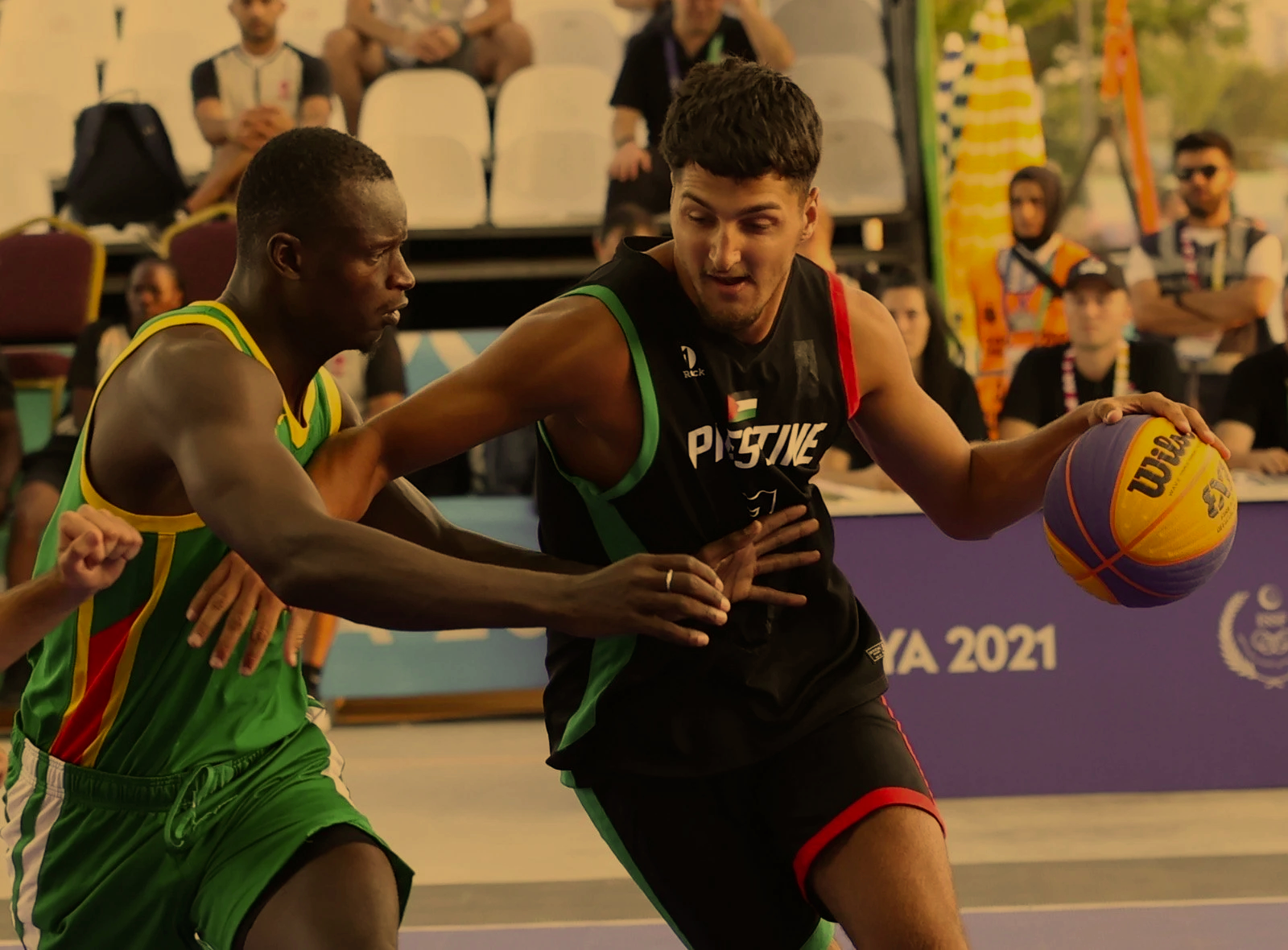
Faith-based activism has become inseparable from solidarity with Palestine in soccer, particularly since October 2023 and Israel's genocide in Gaza. Arab and Muslim athletes emerged as some of the first and most consistent voices expressing solidarity with Palestine, far outpacing mainstream Western sports organizations' public statements. This created a split: while major U.S. sports leagues implemented policies suppressing Palestinian flag displays and political speech, Muslim and Arab athletes were taking principled public stands.
Karim Benzema, the Muslim French soccer legend, publicly called for a ceasefire and expressed support for Palestinians following October 2023. Instead of receiving support, he faced intense political backlash from French government officials and media outlets, drawing widespread criticism for the double standard in how Muslim athletes’ political expressions are received. Benzema’s case exemplifies how Muslim athletes’ advocacy for Palestine often provokes disproportionate scrutiny and hostility compared to similar activism in other contexts.
As athletes across the globe partake in fearless acts of solidarity, sports organizations like the NBA have done the opposite by issuing one-sided statements, failing to address Israel’s ongoing genocide and occupation in Palestine. . On October 8th 2023, the NBA and NBPA issued the following statement: “The NBA and NBPA mourn the horrific loss of life in Israel and condemn these acts of terrorism. We stand with the people of Israel and pray for peace for the entire region.” Sports fans, however, have continue to stand in solidarity with Palestine. Many NBA fans took issue with the fact that the NBA never once addressed the Palestinian people.
In 2018, when the NBA’s All-Star fan ballot listed “Occupied Palestine” as an option, there was pressure from the Israeli Sports Minister to remove it. Another article says: “In 2018, the NBA was forced to apologise for describing the Palestinian territories as ‘occupied’ on its website, bowing to pressure from… Israel.”
Players themselves have received backlash from the league due to this cause. Dwight Howard, a prolific player and first ballot Hall-of-Famer quoted on his podcast that “When I played … I tweeted ‘Free Palestine’ and I almost got kicked out of the league for it.”
As avid sports fans and athletes ourselves, the divide between fan bases and organizations just keeps on increasing and the love for the team just isn’t present from the owners. We can see it when owners ignore fan loyalty in the everlasting chase for maximizing profits. Sports activism, utilizing a multi-billion dollar stage, presents a political threat to these organizations who value profit over principle. The career risks taken by Muslim and Arab athletes emphasize their deep conviction, and by taking these risks they show hundreds of millions of people, young children to adults, what it means to stand up for the truth.
Your Naseeb May Not Be in the SCC, but Your Community Is
Aliza Shahab
It is a truth universally acknowledged, or at least circulating the second floor of the SCC, that a college student in possession of a tuition bill and a passing GPA must be in want of a spouse. None of us are ignorant of this particular epidemic. We sit in 90-minute lectures, drowning in debt and boredom, daydreaming of the one escape we’ve been promised: marriage.
The obsession manifests with a predictability that’s almost scientific. It’s observed in the group chat when an event is announced; the sudden, suspicious spike in attendance for a general event compared to the brothers’ event (where the scenery is decidedly less interesting). We’ve plowed through enough low exposure reels with a fabricated hadith on them to be romantics. We’ve also heard enough cautionary tales of hookup culture to be terrified, all while the opposite gender is accessible at 90 megabits per second.
The result is a collective delirium. We joke about it constantly, of course, but in private, the fixation is deep. We’re all certain that companionship is the cure.I can’t pretend to understand the reason for this obsession, or pretend to be above it. Maybe, in knowing Allah, we’re left with a longing for a connection that this dunya cannot satisfy. That longing isn’t the issue. It’s the vast chasm between wanting a relationship and being prepared for one. The experience that fills that space, however unromantic it may seem, is community.
For the purpose of my argument, "community" in 2025 is not an abstract ideal. It’s the people we share values and ideals with, and the people we actively work to cultivate those values with. It could be your MSA (it’s probably not), it might be the three people you’re in every class and extracurricular with (they’re kinda pretentious), or it’s the couple of guys you always play ball with (they smell a little). The cast of characters matters far less than the consistency of the cast.
Community is exactly the practice of showing up. It’s the cultivation of patience when personalities clash, the exercise of humility when the group’s goal overrides your ego, and the grit required to remain sociable even when you would rather be in bed.
And here’s the uncomfortable observation: many of us claim to be in desperate want of a life partner, yet we display a remarkable inability to sustain even a friendship. We view the "huzz" as a prize to be won, yet recoil from the labor of platonic maintenance. We avoid repetitive small talk; we flee from conflict at the first sign of awkwardness; we flake on plans unless the incentives are high (food). We protect our comfort zones with the zeal of a sacred duty.
We’re supposed to be ready for a spouse? If we can’t maintain a small handful of community connections, why do we think we can jump straight to lifelong companionship?
We’re squandering the little time we have. College is the last environment where community is a default setting, a happy accident of proximity. We treat this rare period of easy access as a mere waiting room for marriage, scanning the horizon for a spouse while ignoring the brothers and sisters sitting right next to us. We fail to realize that once the diploma is framed, friendship shifts from "automatic" to "manual labor."
Research on adult social networks confirms what we fear: deep bonds are built in shared, consistent spaces. Once those spaces vanish, community becomes an administrative task; a nightmare of Google Calendar invites, conflicting work schedules. If you spend these precious four years agonizing over a hypothetical relationship instead of cementing the real ones in front of you, you will graduate spiritually and socially bankrupt. If you can’t learn how to participate in a village now, when the rent is cheap and the stakes are low, you’ll struggle to build your castle later.
So the conversation about “finding your naseeb” at the college-age misses something essential. It assumes that the prerequisite skills, habits, and behaviors are already in place. They aren’t. You cannot realistically expect to maintain a stable relationship if you haven’t maintained stable ties in your own community.
You can’t expect to succeed in the most intimate partnership of your life if you haven’t practiced partnership anywhere else.
And if Allah has written someone for you, trust that they will not miss you. They should meet someone who has learned how to show up.

Silencing Through Ownership
Aariz iqbal
In September 2025, Trump made a $14B deal transferring control of TikTok’s U.S. operations from ByteDance to a group of American investors, many with clear pro-Israel connections. Oracle took the lead role, and the company now manages TikTok’s data and algorithm. Ellison, the CTO who manages the program,has donated tens of millions to the IDF, and Oracle’s CEO Safra Catz is known for her strong pro-Israel stance. Other investors include the Murdochs (owners of Fox News), Michael Dell (whose company has worked with the Israeli military), and Abu Dhabi’s MGX Fund, which aligns closely with Israel politically after the 2020 normalization deal.
The official reason for the sale was national security, but many believe it was really about controlling the growing influence of pro-Palestinian voices online. After Gaza coverage in 2023 went viral on TikTok, U.S. lawmakers openly complained about anti-Israel content shaping young Americans’ opinions. Even Netanyahu called the purchase “the most strategic acquisition,” describing social media as a tool used to sway the people in a specific political direction.
For Muslims, especially those speaking out for Palestine, this deal is a setback. TikTok had become one of the only platforms where regular Muslims could share stories from Gaza and enlarge voices ignored by mainstream media. Now, with pro-Israel investors overseeing the algorithm, there’s real fear that Palestinian narratives will be buried. The platform already banned certain phrases, hired ex-IDF personnel for moderation, and removed millions of videos tied to Gaza. Arabic content gets flagged or deleted far more often, and Muslim creators face shadowbans for even peaceful advocacy.
This isn’t just a corporate acquisition, it's the narrowing of digital space for Muslims. It’s about silencing a generation that found power through storytelling, empathy, and raw truth online. With TikTok under this new control, Muslims lose one of the last major platforms where their voices could reach the world unfiltered.
Sources
Responsible Statecraft: Summary of the TikTok acquisition by American and Israeli-linked investors, with background on Oracle’s involvement and political implications.
The New Arab: Details on the investors in the TikTok deal—Larry Ellison, Oracle, MGX (UAE fund), and Murdoch family.
Blog.boycat.io: Deep dive into Oracle’s history, donations to the Israeli military, and corporate motivations for shaping TikTok’s algorithm.
TRT World: Analysis of efforts by Oracle and new TikTok ownership to embed pro-Israel content and implications for US culture.
Alwaght.net: Concerns from digital rights activists and civil society on Palestinian voice censorship following the TikTok sale.
CNN: Explanation of Oracle’s new oversight role in TikTok’s algorithm and user data following the sale.
NYMag: Critical exploration of whether TikTok’s new owners will censor pro-Palestinian content.
7amleh.org: Civil society’s open letter on risks of the TikTok sale for Arab and Muslim users.
Human Rights Watch: Reporting on social media censorship of Palestinian content.
The Verge: Context on how the Palestinian issue shaped TikTok’s political moderation debates.
Middle East Monitor: Coverage of Oracle executive’s expressed goal to “embed love for Israel” in US media and culture.
Droplets of Dawah
dawah table warriors
“I used to only see the beauty of the outward actions of Islam, but after this conversation, I see the real beauty of the religion lies within.”
Hearing non Muslims speak about Islam in this manner reminds me why working on your inward actions matters so much. It shows that small actions in rectifying your heart or showing good akhlaq opens people’s hearts to the beauty of Islam. It brings about thankfulness for being Muslim, renews “the why” and also encourages me to show up to my religious duties with hope in the creator.
The purpose of the outward actions of Islam is to strengthen the individual’s relationship with God and His creation. The consistent effort to fulfill these outward actions result in the individual experiencing the sweetness and beauty of faith.
The Good of Davis
asra Kakar
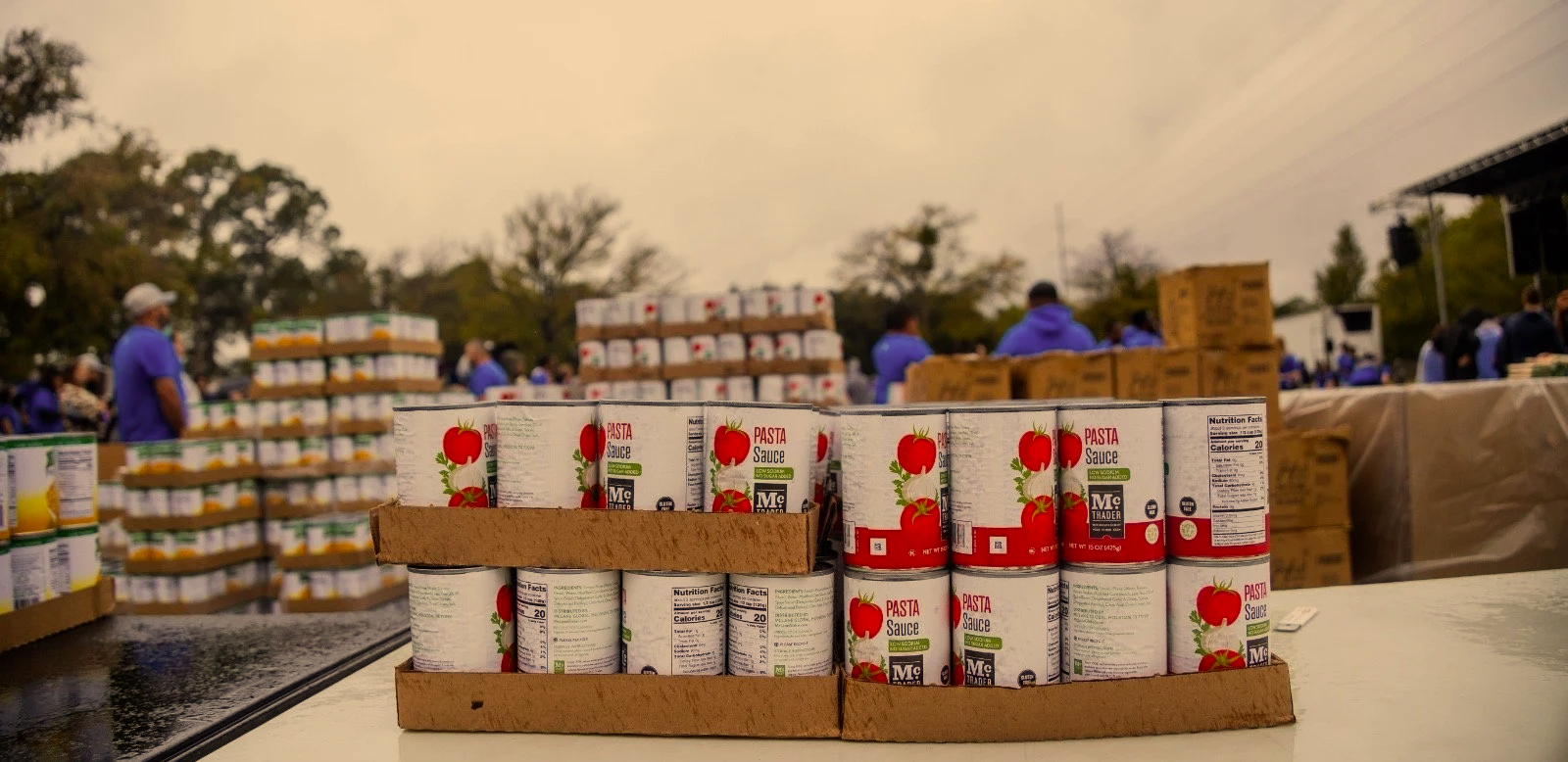
Across the states, millions of Americans struggled with the foreboding issue of where their next meal would come from because of the recent effects of the longest government shutdown in history. Due to the inability of Congress to decide on a new annual budget by September 31st, the government shutdown was enacted and forced the immediate closure of all federal programs, including the life-saving SNAP program.
SNAP, otherwise known as the Food Stamp program, created by former president Lyndon B. Johnson offers assistance and aid to struggling individuals with the costs of groceries and food, to ease their financial worries and alleviate food insecurity. Although a federal program, the states determine their own eligibility requirements for recipients who tend to be individuals in a family, disabled, low-income, or students.The assistance given by SNAP is offered through monthly deposits in EBT cards. Fortunately, benefits were given out in the month of October, however, the funding for SNAP quickly ran out before the month of November began which worried millions of Americans, including students on our campus.
At UC Davis, a large portion of the student body, especially those without a dining plan or stable income, greatly rely on the assistance of SNAP. According to an airing on KRCA 3 news, the Basic Needs director, Connor Daniels stated that around 15-20% of the population who use CalFresh are from UC Davis. Like people around the country, students were forced to find other means to feed themselves while balancing school and life. However, the Davis community decided to step up and help their neighbors in need. Organizations and grocery stores around ‘cow-town’ took the initiative and created food programs to help students and others with the lack of SNAP benefits. The staff at Davis Food Co-Op set up a donation and gift-card program where kind-hearted shoppers could buy gift-cards to be later used by people in need to pay for any products at the Co-Op. Alongside the Co-Op, on-campus resources, such as the ASUCD Pantry and Yolo County Food Bank collaborated to create a joint initiative program where students would be able to pick up food kits that were assembled by volunteers after a generous 10,000 food pound donation. (KRCA 3 News) In times of need and struggle, Davis stood up and decided to act as a community, whose generosity benefited students greatly. These simple acts of kindness reflect the values of community highlighted in Islam as it creates unity. Fortunately, the government shutdown was voted to end on November 12th allowing for the funding for SNAP to continue and students to be able to purchase proper food.
Source: https://www.youtube.com/watch?si=CkGQzjqRO06-Lvh6&v=QAyqsC8kJ0c&feature=youtu.be
5 Dollar Pizookie Deal
Hamza bandarkar
My apartment rejoices at the steal
Cookies and cream with chunk of oreo
Leap in joy like im mario
White chocolate macadamia nut
Im unable to keep my mouth shut
The second day of the week
The 5 dollar deal to fill my beak
Alas horror struck as i furrow my brow
I cry in silence but my heart is aloud
The people who i regarded as “bro”
My roommates, said they don’t want to go
Sudanese Gold
Hamza bandarkar
Star-forged metal Aurum
The delver’s prize in huddled forum
Throughout history, the golden child
Greed and war for its light, beguiled
To gild the red carpets of a country absent
The sands wrung with a scarlet memory
An emirate’s mark still lingering by proxy
Famine eating earthbound moxie
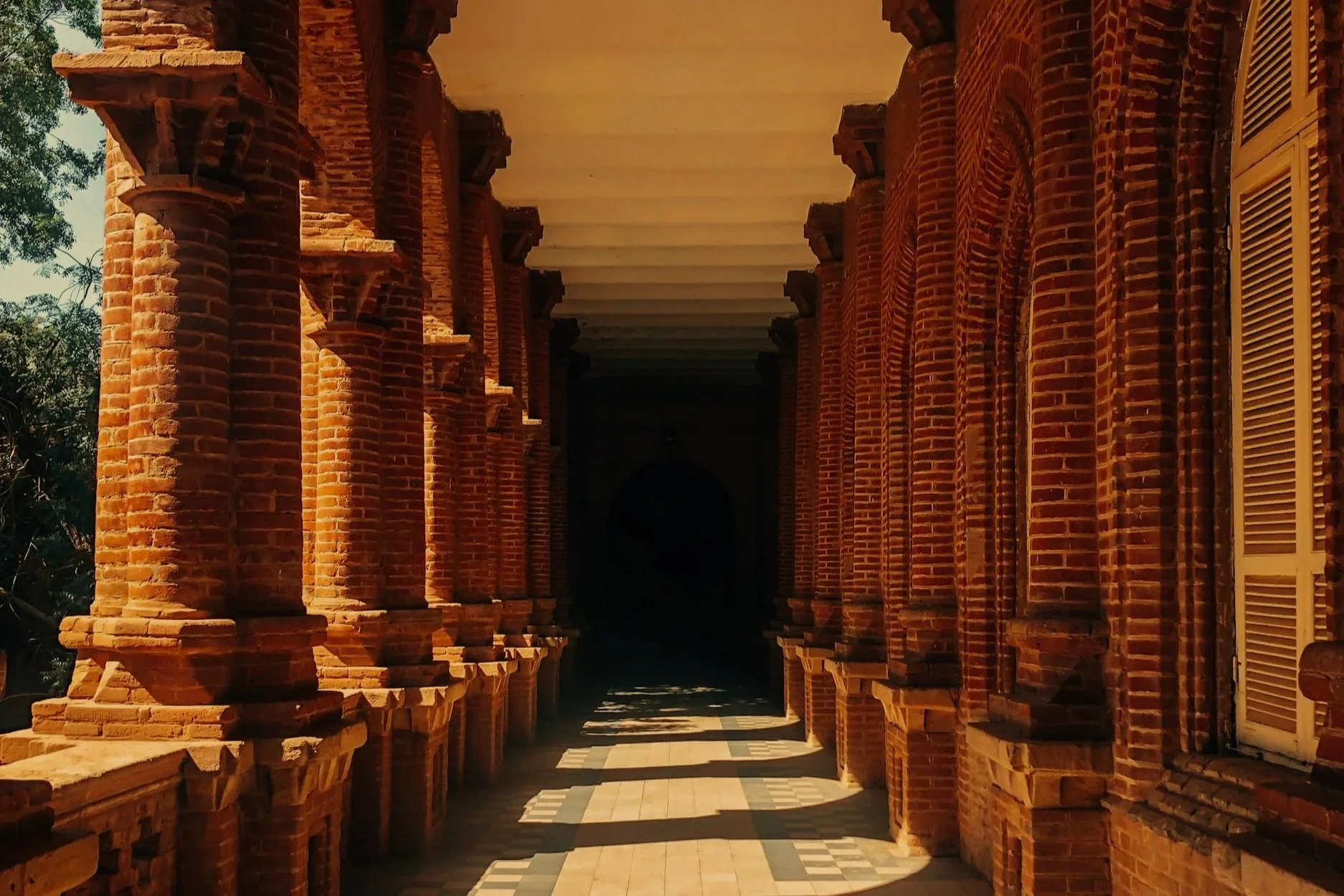
Primordial dust that made kings from farmers
Treasure used as an empire’s armor
A gift present before the drawing of borders
And a metal wielded and forged to create order
The golden dunes remember the cost
Of their inhabitants now lost
Being priced at thousands of souls
To find their worth weighed in Gold
RSO Highlight: Association of Muslims in Politics & Law (AMPL)
yousef khan & umar shaikh
Introducing AMPL! A community centered around Muslims on campus who are Pre-Law or interested in going into Politics. We host social events and professional development events with qualified and relatable speakers. We hope to see you at our next event!